Tips
Short, practical organizing tips. The same ones we post on our Facebook Page.
Clear the counter, keep what you use daily
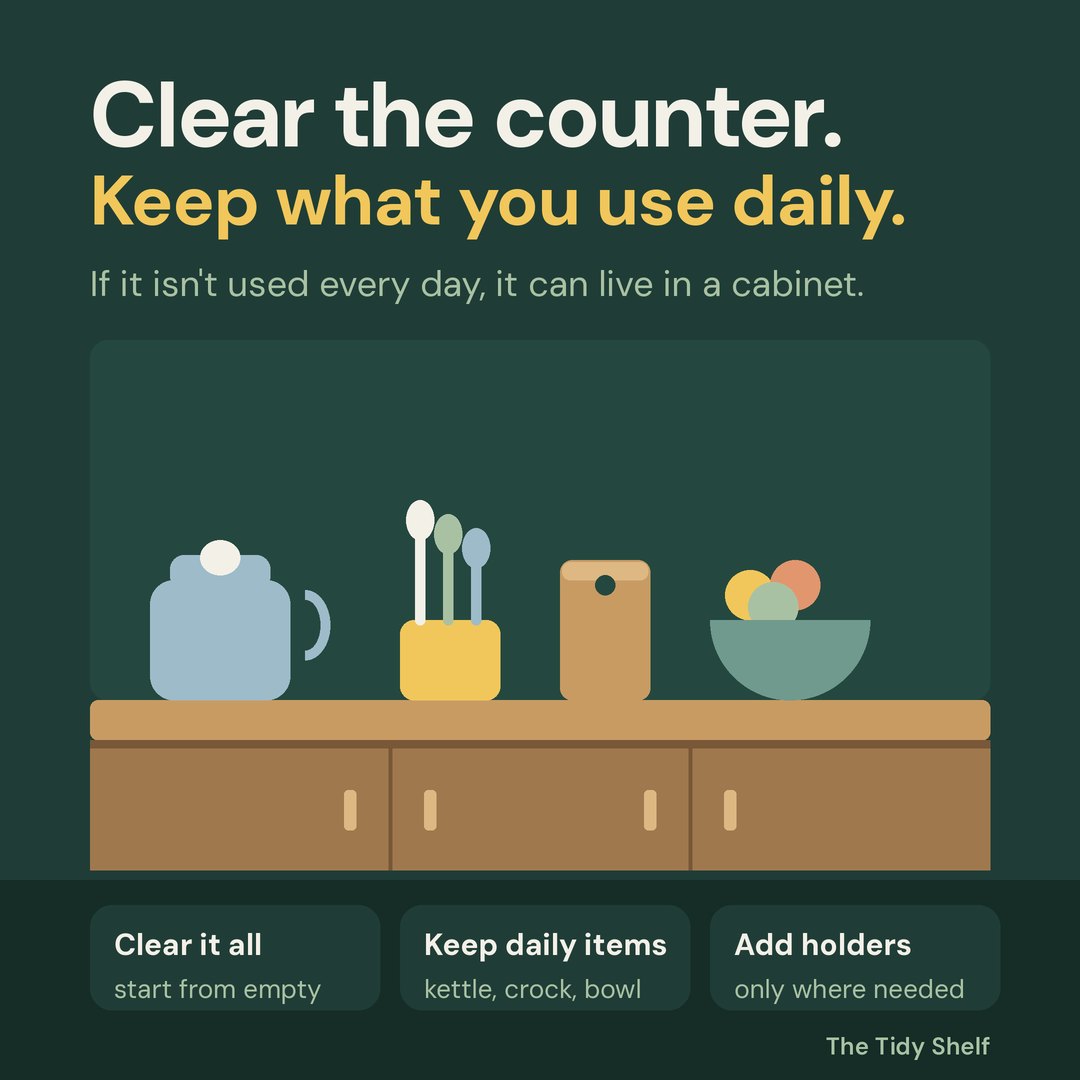
A simple rule for a calmer kitchen: if you don't use it every day, it can live in a cabinet.
- Clear it all: take everything off the counter, then wipe it down
- Put back only the daily items: the kettle, the utensil crock, the cutting board
- Add holders only where they're needed. A plain crock or a small tray is often enough
Free counter space makes cooking easier, and it's quicker to clean.
Our countertop guide has the full approach:
Read the guide
What's the one item that always ends up on your counter, even though it shouldn't? 😄
Plan around the pipes
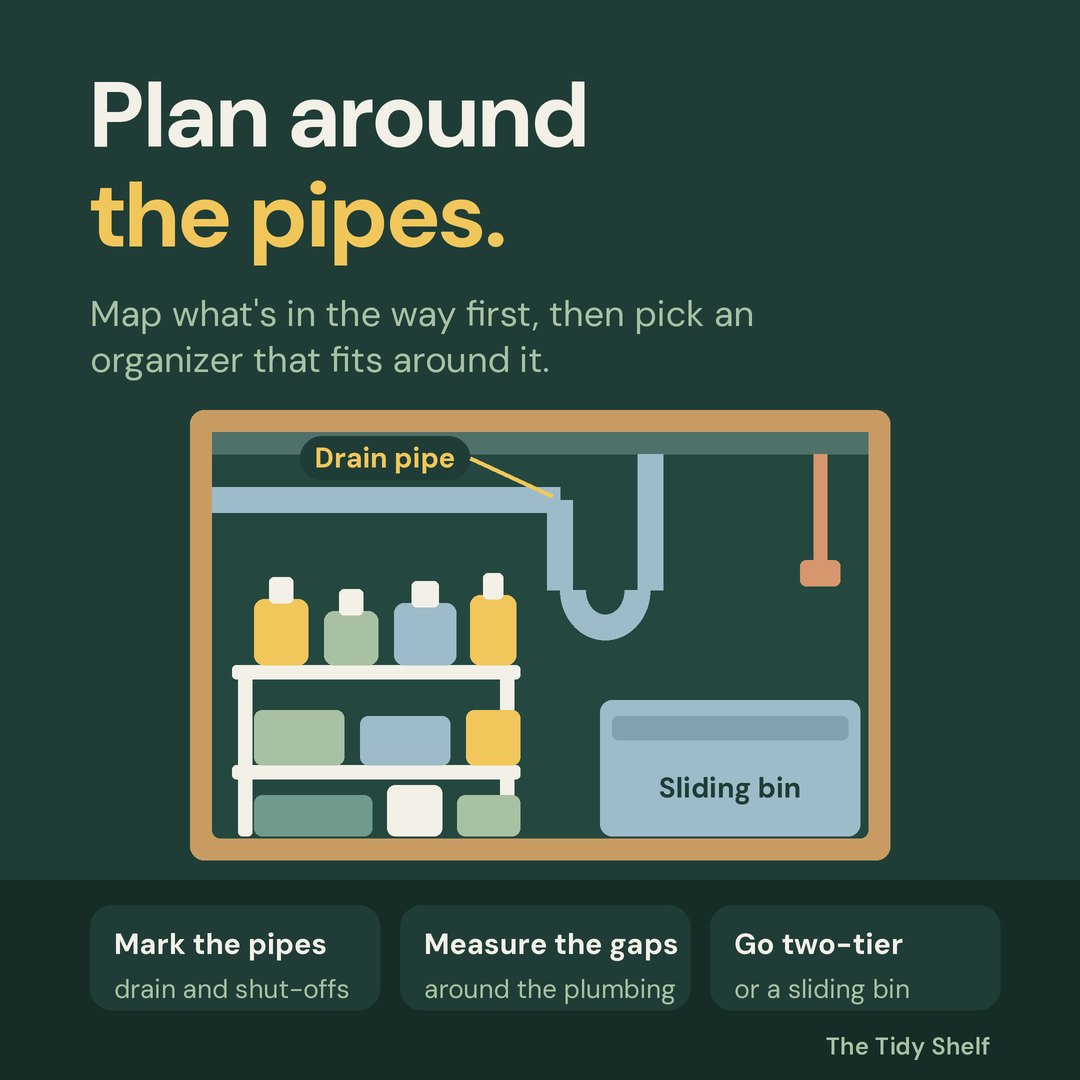
The cabinet under the sink is awkward because of the drain, the trap and the shut-off valves. Before you buy an organizer:
- Mark the pipes: note where the drain and shut-offs sit
- Measure the gaps: the clear width and height beside and below the plumbing
- Go two-tier or sliding: two-tier shelves and pull-out bins use the space around pipes, and a flat shelf doesn't
A tip for safety: keep cleaning products low and out of reach of children, and make sure you can still reach the shut-off valves.
Our under-the-sink guide covers the details:
Read the guide
What's hiding at the back of your under-sink cabinet? 😬
If you can't see it, you won't eat it
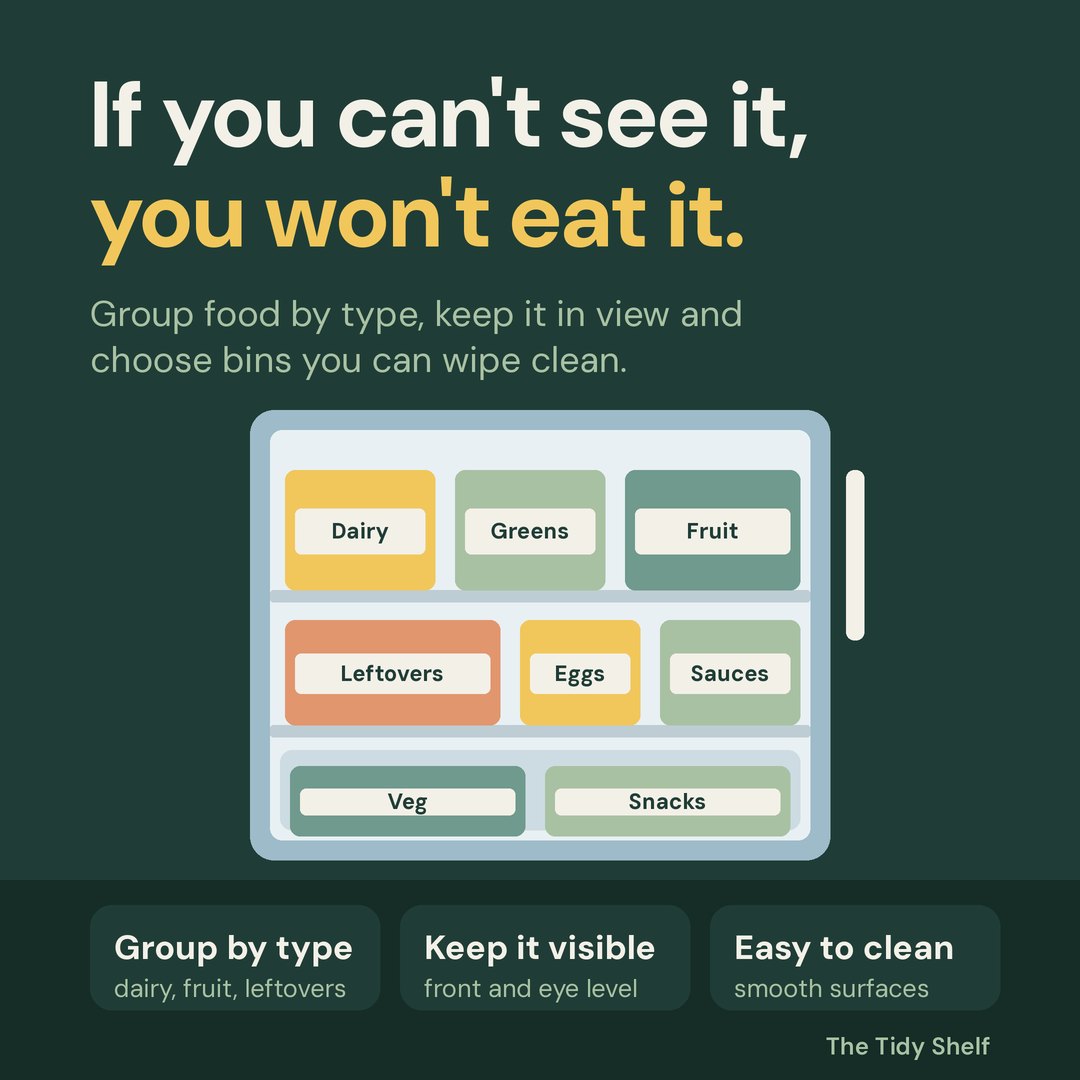
Food gets forgotten and wasted when it's pushed to the back of the fridge. Three habits help:
- Group by type: dairy together, fruit together, leftovers together
- Keep things in view: the items you use most go at the front and at eye level
- Choose bins with smooth surfaces, so a spill wipes off in seconds
Do the same in the freezer. Flat, labeled bins beat a pile of loose bags.
Our fridge and freezer guide has the details:
Read the guide
Which shelf in your fridge turns into a mystery zone? 😅
Measure the inside, not the front
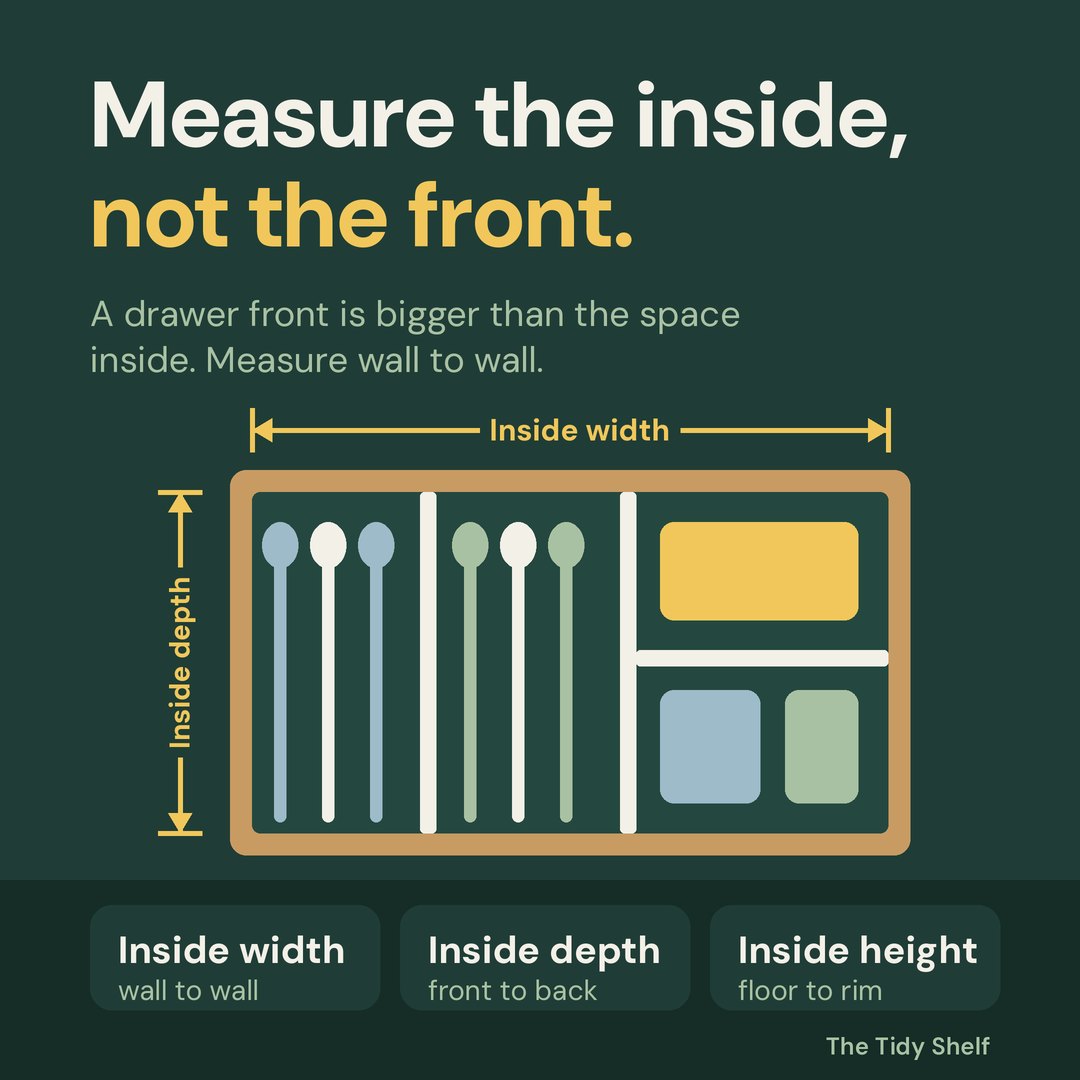
A drawer front is always bigger than the space behind it. If you size dividers from the outside, they won't fit.
Open the drawer and measure:
- Inside width: wall to wall
- Inside depth: front to back
- Inside height: floor to rim, so the divider clears the top
Then choose dividers that adjust. They keep working when your utensils change.
Our drawer guide covers what to look for:
Read the guide
What's the one thing that always ends up in your junk drawer? 😄
Measure first, then buy
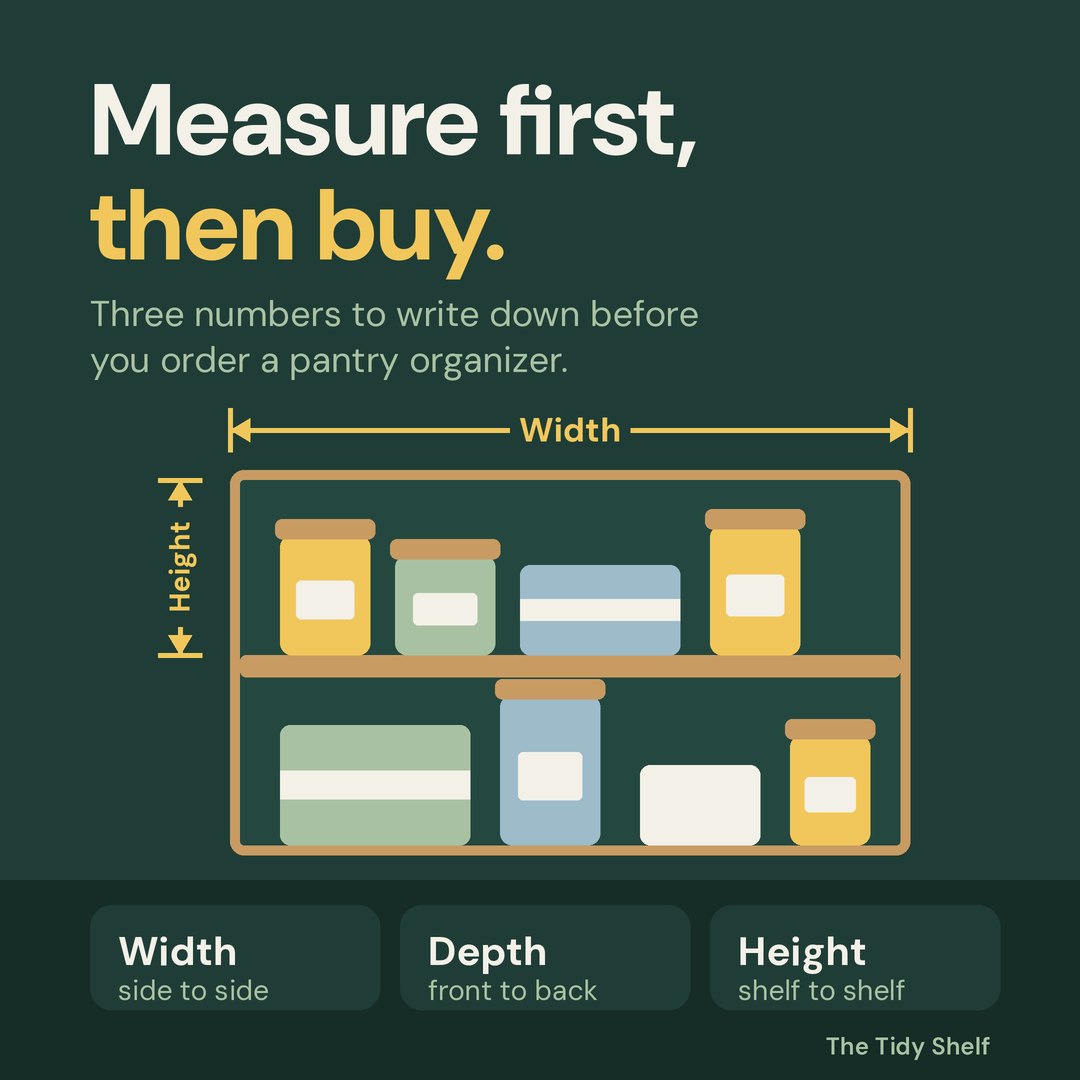
Most organizers get returned because they're 2 cm too big. Before you order anything for your pantry, write down three numbers:
- Width: side to side
- Depth: front to back
- Height: from one shelf to the next
Put the numbers in your phone's notes and check them against any bin or turntable before you buy.
Our pantry guide shows what to measure and what to skip:
Read the guide
Which shelf in your kitchen is the hardest to keep tidy? Tell us below.
Questions or a tip you would like covered? Contact us through our Facebook Page.